Six Barrels, One Compost Heap and a Strict Deadheading Rota: The Secret Life of Our Flower Tubs
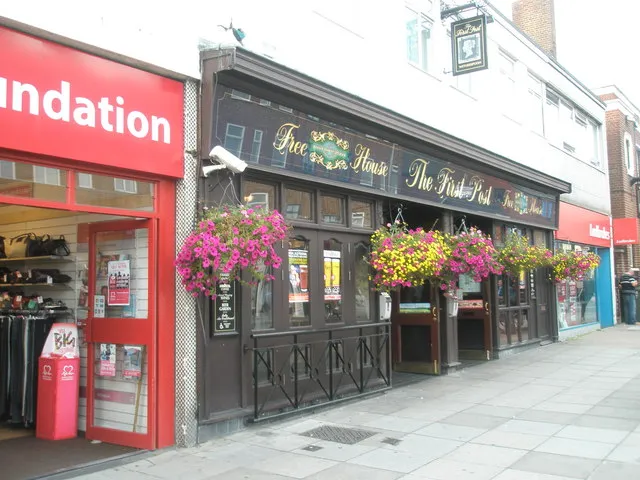
Photo: Basher Eyre, CC BY-SA 2.0, via Wikimedia Commons
Ask anyone from Barrow upon Humber how to give directions to The Royal Oak and you'll rarely hear street names. You'll hear "the pub with the barrels." Six of them, half-cut oak, brimming from April to the first frost with geraniums, lobelia and the odd marigold that has no business surviving a Lincolnshire westerly but does anyway.
They've become part of the village furniture, like the war memorial or the old postbox. And like most things that become landmarks, nobody quite remembers who started them — though the black book in the snug suggests it was landlady Pat, sometime in the early nineties, who got fed up of looking at bare flagstones every time she unlocked up.
Where It All Begins: A Compost Story
Every spring, before a single seed goes in, there's the matter of the soil. We don't buy it in bags. We don't need to. For the best part of two decades, a chap named Dennis — formerly of the allotments off Barrow Road — has kept a heap going specifically for the pub, built from spent hops, kitchen peelings from the kitchen and, we're told, a good deal of tea leaves.
Dennis retired from the allotment committee years ago but the compost arrangement has outlived his tenure, his shed and one memorable falling-out with a neighbour over a hedge. The heap passes now to his grandson, who delivers it in the back of a battered estate car every March, usually in the same week the first lambs appear on the Wolds.
Whether the compost makes the flowers better is a matter of fierce opinion in the tap room. What isn't disputed is that it smells properly of earth, and that counts for something.
The Adoption Scheme Nobody Officially Runs
Here's the part most visitors never learn: each barrel has a person. Not a rota, nothing written down — just an understanding that's accumulated over the years. The barrel nearest the door belongs, in spirit, to Mrs. Elsie from across the lane, who deadheads the geraniums most mornings on her way to the shop. The two by the bench are watched over by the Hendersons. The one that always dries out first has been quietly adopted by young Tom behind the bar, who gives it a secret evening water when he thinks nobody's looking.
Nobody applied for these roles. Nobody was asked. It simply happened, the way things do in villages, and if you tried to formalise it the whole arrangement would probably collapse out of protest.
The Unwritten Rules of Deadheading While You Wait
There is an etiquette. We've never published it, but it exists, and newcomers pick it up faster than the darts rules.
First: you may pinch off a spent bloom, but only with fingers, never secateurs. Second: you deadhead the tub nearest where you're standing, not your favourite one — that's seen as showing off. Third: if Elsie is already at it, you wait your turn, because Elsie has been doing this since before you had opinions about flowers.
And the cardinal rule: no matter how tempted, you do not deadhead while holding a full pint. It has been attempted. It has ended in the flowerbed and the flowerbed has not forgotten.
Want the Look at Home? A Quick Guide
Plenty of villagers have asked how to recreate the barrels on their own doorstep, so here's roughly what we do.
The container: A genuine half oak barrel, drilled with drainage holes and raised an inch or two on bricks so water escapes. Ours came from a local brewer decades ago; garden centres sell good replicas.
The base: A layer of crocks or gravel, then a rich, well-rotted compost. Ours is Dennis's, but any good multipurpose with added manure will do.
The planting: We go for a "thriller, filler, spiller" arrangement. A upright geranium or two in the centre, some petunias or busy Lizzies around the middle, and trailing lobelia or ivy tumbling over the rim. Plant after the last frost — mid-May up here, no earlier, however keen you are.
The care: Water daily in summer — barrels dry out faster than borders, as Tom's barrel will testify. Feed weekly with tomato food once they get going, and deadhead ruthlessly. That's not decoration; it's how you keep them flowering until October.
The winter: Empty, clean and store the barrels dry, or underplant with spring bulbs and let them do their thing. We've had daffodils in ours some years, and nobody's complained.
More Than Just Flowers
People sometimes ask why a pub bothers. The answer is that the tubs stopped being ours a long time ago. They're the backdrop to a hundred small village moments — first dates, wake gatherings, kids waiting for the chip shop next door, the May Day photos that end up in the parish magazine.
Pat started them because bare flagstones looked sad. Thirty years on, six barrels have become the way people say they've arrived. You can't buy that kind of landmark. But you can grow it — with good compost, patient hands and a village willing to adopt a tub.