Nobody Leaves When the Lights Go Up: The Strange Clock That Runs This Pub
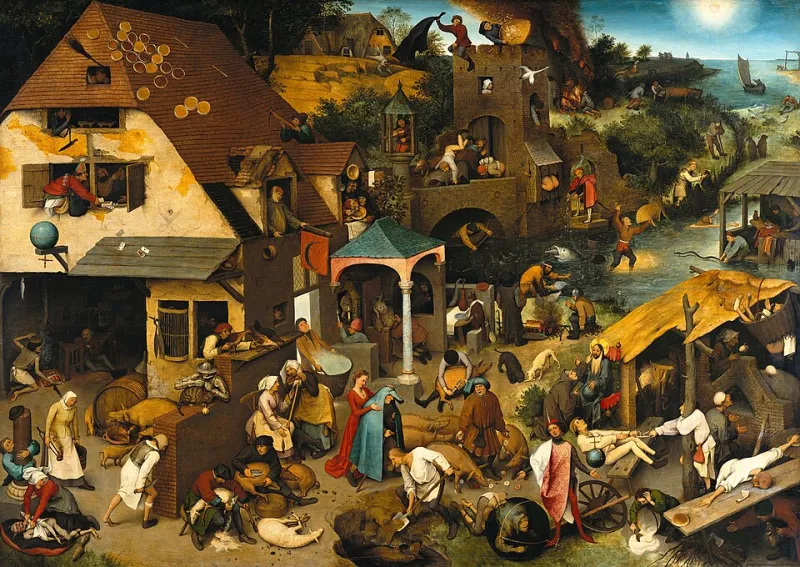
Photo: Pieter Brueghel the Elder, Public domain, via Wikimedia Commons
There are two clocks in The Royal Oak. One is on the wall behind the bar, and it keeps perfectly legal time. The other is invisible, runs on no batteries, and has been quietly governing this building since roughly 1821. Ask any regular what time it is and they won't look at the wall — they'll look at who's already sat down.
Six O'Clock Sharp, Apparently
In a city, an evening out is an event: booked, planned, preceded by a shower. In Barrow, the evening is simply the part of the day after the daylight runs out. Which is why, come winter, the six o'clock arrival is less a choice than a tide.
The first regulars don't come for a session. They come for the transition — the moment the pub stops being empty and starts being itself. The fire's caught, the first dominoes are being stacked, and whoever's on the pumps has time for a proper chat before it gets busy. There's a wordlessness to it. A nod at the door, a half-pint before the half-pint.
Historically, this makes sense. When this pub opened its doors two centuries ago, the village worked to the sun and the seasons, and the evening pint was the day's full stop. We've had electricity, tractors and telly since, but the internal clock never got updated.
Last Orders: A Negotiation, Not a Decree
Now, the ten o'clock bell. Legally, we call time. Practically, in a village pub, calling time is closer to diplomacy.
The bell rings, and what follows is a quiet dance everyone knows the steps to. Someone raises a finger for a swift half. The person behind the bar — who has heard this exact request four thousand times — weighs it against the mood of the room. If the fire's good and the conversation's better, "last orders" becomes "last-ish orders."
This isn't lawlessness. It's the opposite: it's how a small community has always settled things, by reading the room rather than the rulebook. Our Victorian predecessors would have recognised it instantly. The licensing magistrate sets the hour; the landlord sets the temperature.
The Twenty Minutes After the Lights Go Up
Here's the part outsiders never believe: some of the best moments of the week happen after the bell, when the lamps go up and the room thins out.
There's a peculiar honesty to that stretch of the evening. The loud tables have gone home. What's left is a handful of people who aren't in any hurry, and the conversations get slower and truer — family news, village matters, the odd memory of the pub itself from decades back. We've learned more about this building's history in those twenty minutes than from any archive, usually from someone's uncle who "used to help with the barrels in the seventies."
Nothing is rushed out. Chairs are pulled up rather than stacked. The last half-hour of a village pub night isn't a wind-down; it's the point.
Two Hundred Years of the Same Hour
People sometimes ask why we don't extend hours, modernise the rhythm, chase a later crowd. But the truth is the old clock suits us. A pub that's stood on this corner since 1821 has outlasted every fashion precisely because it keeps time the way the village does — early starts, gentle endings, and a bell that means "nearly" rather than "now."
So come at six if you want the fire and the chat. Come at half nine if you want the noise and the dominoes. But if you want the real Barrow experience, stay past the bell — when the lights go up and nobody, quite rightly, reaches for their coat.